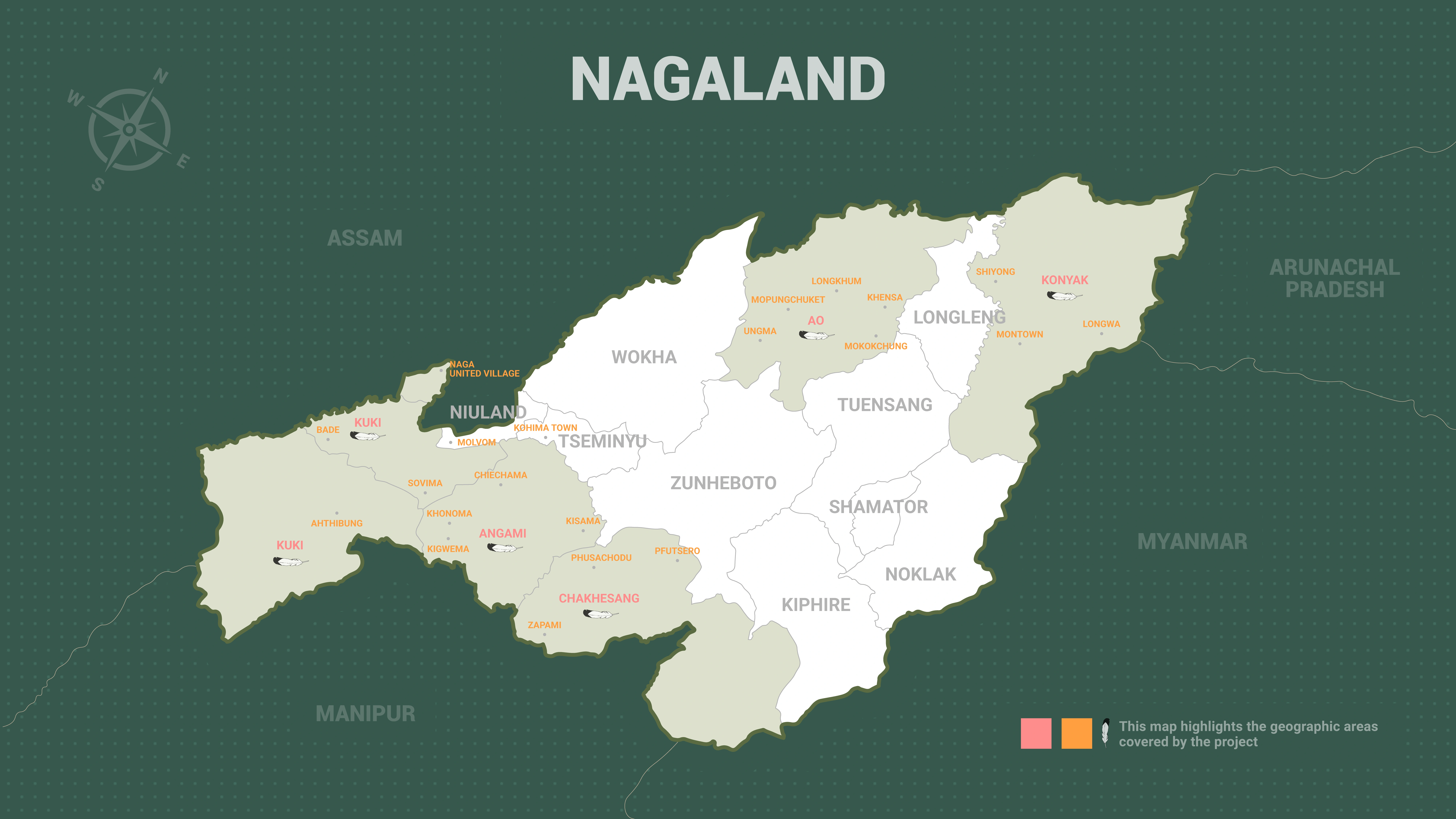
Tap to zoom in the map
Tukhu Rhi is a women’s collective based in Bade Village, Nagaland, committed to crafting eco-friendly products from banana fibre. This initiative blends traditional craftsmanship with a deep commitment to sustainability, helping preserve indigenous skills while promoting economic empowerment for local women. The collective specializes in weaving baskets, mats, and other handmade items, all crafted from banana fibre and bark, which are processed through simple, sustainable methods of cutting, washing, and drying. The fibres are then braided or used as strands to create various products.
The TukhRai Banana Fibre Cluster in Bade Village is a prime example of how traditional skills can generate sustainable income and promote environmental conservation. Nagaland’s abundance of banana plants, particularly wild varieties like Musa velutina and Musa mannii, provides a renewable source of high-quality fibre. These fibres are stronger than jute and can be used in a variety of applications, from decorative items to functional products.
Artisans in Bade have mastered the art of transforming banana fibres into a wide range of goods. Depending on the grade of fibre, they create soft products such as wall hangings, table mats, and bags, or more durable items like carpets, tool bags, and cleaning brushes. The fibres are sometimes blended with cotton, wool, or synthetic materials to create softer textures, or left coarse for more robust products.
This banana fibre extraction cluster has become a vital economic activity in the region, enhancing the livelihoods of local artisans and promoting sustainable practices by utilizing agricultural waste. Visitors to Bade can witness the harmonious blend of nature, culture, and craftsmanship, experiencing the peaceful rural lifestyle while supporting the preservation of traditional knowledge.