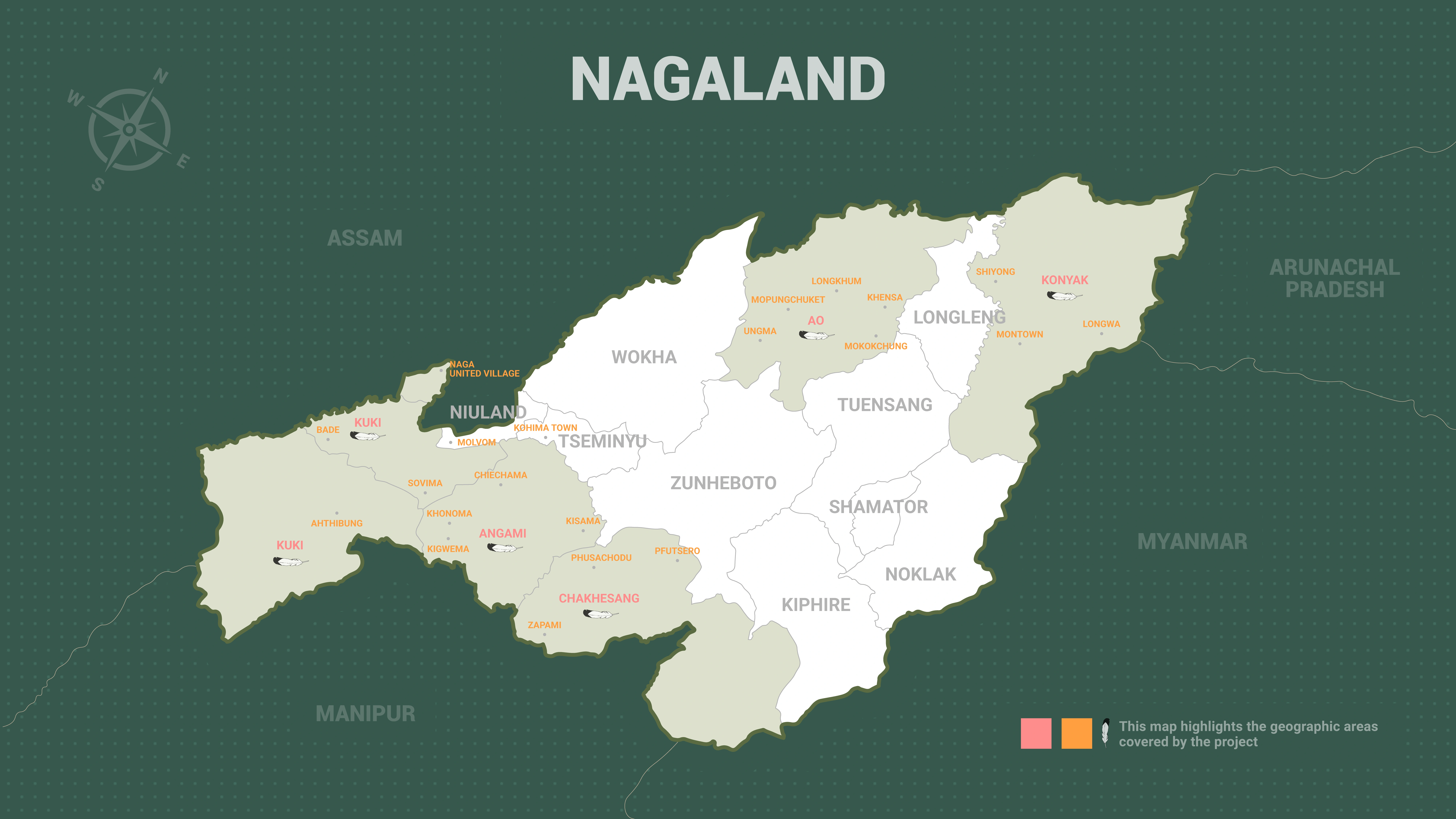
The Kukis of Nagaland primarily reside in the Peren and Dimapur districts, with a few villages in Phek. Historically believed to have migrated from Southeast Asia, particularly Myanmar, they have traditionally inhabited the hilly regions of Manipur, Mizoram, Assam, and Nagaland. As part of the Tibeto-Burman ethno-linguistic family, Kukis take pride in their courage, valour, and warrior spirit, deeply reflected in their folklore and traditions. Before Christianity, their ancestors worshipped Chungmang or Chung Pathan, the Supreme Being, invoking blessings during ceremonies and rituals. They share an intrinsic bond with nature, viewing it as a living entity deeply connected to their existence.
Kuki culture is rich, marked by unique festivals, language, and governance systems. Their society is clan-based, with each clan led by a chief responsible for decision-making, reinforcing respect for elders and strong kinship ties. The Kukis celebrate Mim Kut, a harvest festival emphasizing gratitude, unity, and community bonding. Their language, known as Kuki-Chin, consists of various dialects within the Tibeto-Burman family.
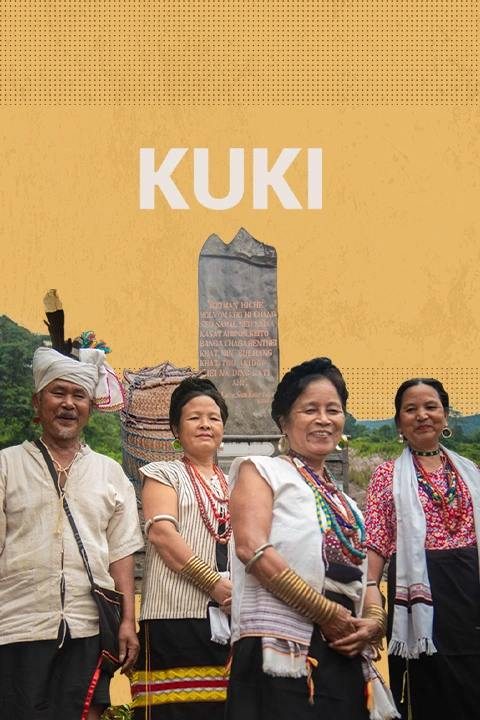
Traditional Kuki attire is rich in symbolism—men’s clothing is simple yet meaningful, while women wear vibrant, intricately woven garments representing resilience and identity. Accessories hold cultural significance, with beaded necklaces denoting status, large earrings reflecting clan ties, and feathered headgear symbolizing bravery. Women also wear silver or brass armlets and bangles, often signifying marital status or age.
Traditionally, knowledge was passed down orally. Sawm, a learning center for boys led by elders (Sawm-upa), trained future leaders for the King’s or Chief’s court. Lawm, a youth club, fostered social activities and skills in farming, hunting, fishing, and sports. Traditional Kuki sports include Kung-Kal (high jump), Ka’ng Ka’p (top game), Suhtumkhawh (javelin throw), and So’ngse (shot put). Deeply rooted in tradition, governance, and craftsmanship, the Kukis preserve their heritage through language, festivals, attire, and community institutions, ensuring their identity for future generations.








.webp)
.webp)
.webp)
.webp)


.webp)
.webp)
.webp)
.webp)
.webp)