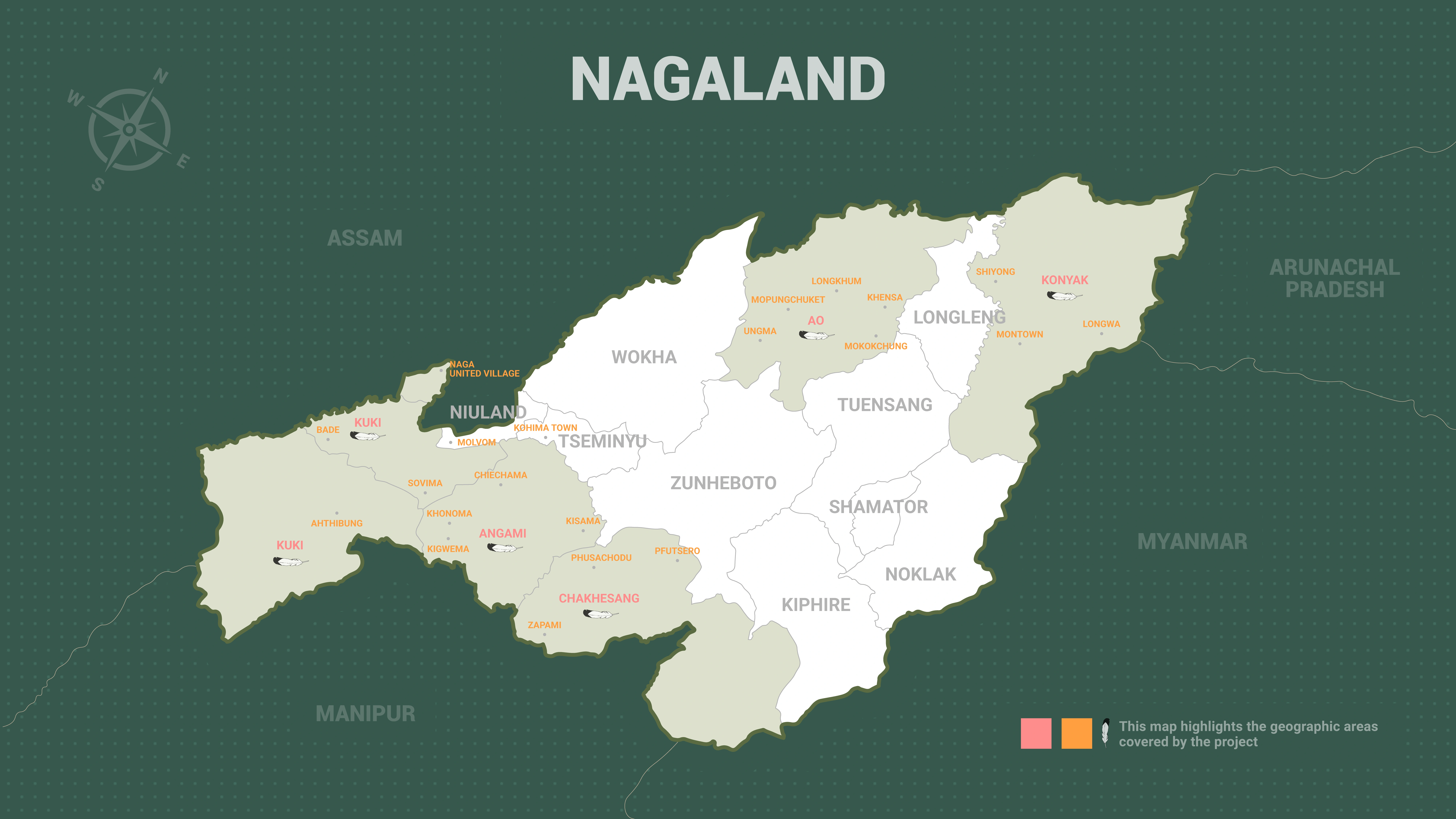
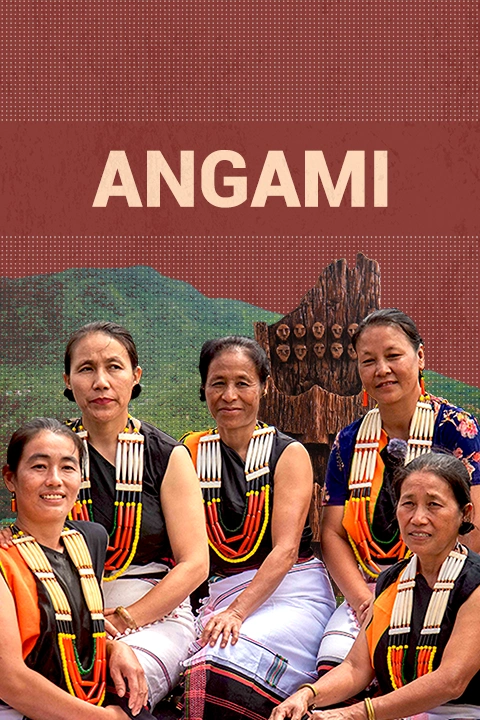
Angamis, one of Nagaland’s major ethnic communities, primarily inhabit Kohima and Dimapur districts. They are agrarian, relying on cultivation, forest resources, and cattle domestication for livelihood. Skilled in weaving and basket-making, they craft traditional attire, household items, and agricultural tools from natural materials like bamboo and wood.
Their villages serve as independent units, with governance led by local community members. Social identity is deeply rooted in clans, khels (village subunits), and villages. Every village is marked by a gate called Kharu, historically used for protection and now preserved as cultural heritage.
Traditionally, young men were trained in kichuki (morungs), institutions that imparted life skills, warfare training, and cultural knowledge. Today, their roles have evolved, like in Khonoma, the morung serves as a communal space for skill transmission and community events. Angami villages also feature monoliths and megaliths, commemorating historical events or honoring individuals known for their contributions.
A notable structure is the khwehu, a monolith specific to khels, symbolizing the wealth and generosity of individuals who hosted seven feasts of merit for the community. Surrounding the khwehu is a circular stone seating area, tehuba, used for clan meetings and social gatherings. In Khonoma, three khwehus and tehubas represent the Thevoma, Sevoma, and Merhüma khels. These enduring traditions reflect the Angami people's deep connection to their history, social structure, and cultural heritage.










.webp)
.webp)
.webp)
.webp)
.webp)


