In Nagaland, like all other ethnic societies, oral traditions have been integral to the cultural identity of the communities. The songs, poetry, ballads, and chants have been the carriers of Naga historical narratives, cultural values, religion, customs, and ways of living passed down through generations. It is believed that the rhythmic and musical features helped preserve ancestral knowledge and wisdom better, as remembering through songs or poems was easier. Thus, the Naga folk songs are not merely musical expressions but serve as a powerful medium for storytelling, preserving history, and expressing emotions.
The various genres of songs include festival and dance songs, songs narrating tales of love, joy, courtship, sorrow, nature, ancestral stories, myths and legends, and everyday life, providing a glimpse into the social fabric of Naga society. Some communities have songs for various occasions such as pounding rice, participation in processions, harvesting, etc. However, the Nagas are spontaneous singers and sing without any occasion too.
Communities such as the Aos have a unique tradition of songs that are essentially sung poetry, where one song can be sung in 13 tunes. These tunes are typically associated with the occasion in which the song is being sung. From the tune, one can gauge the mood and meaning of the song.
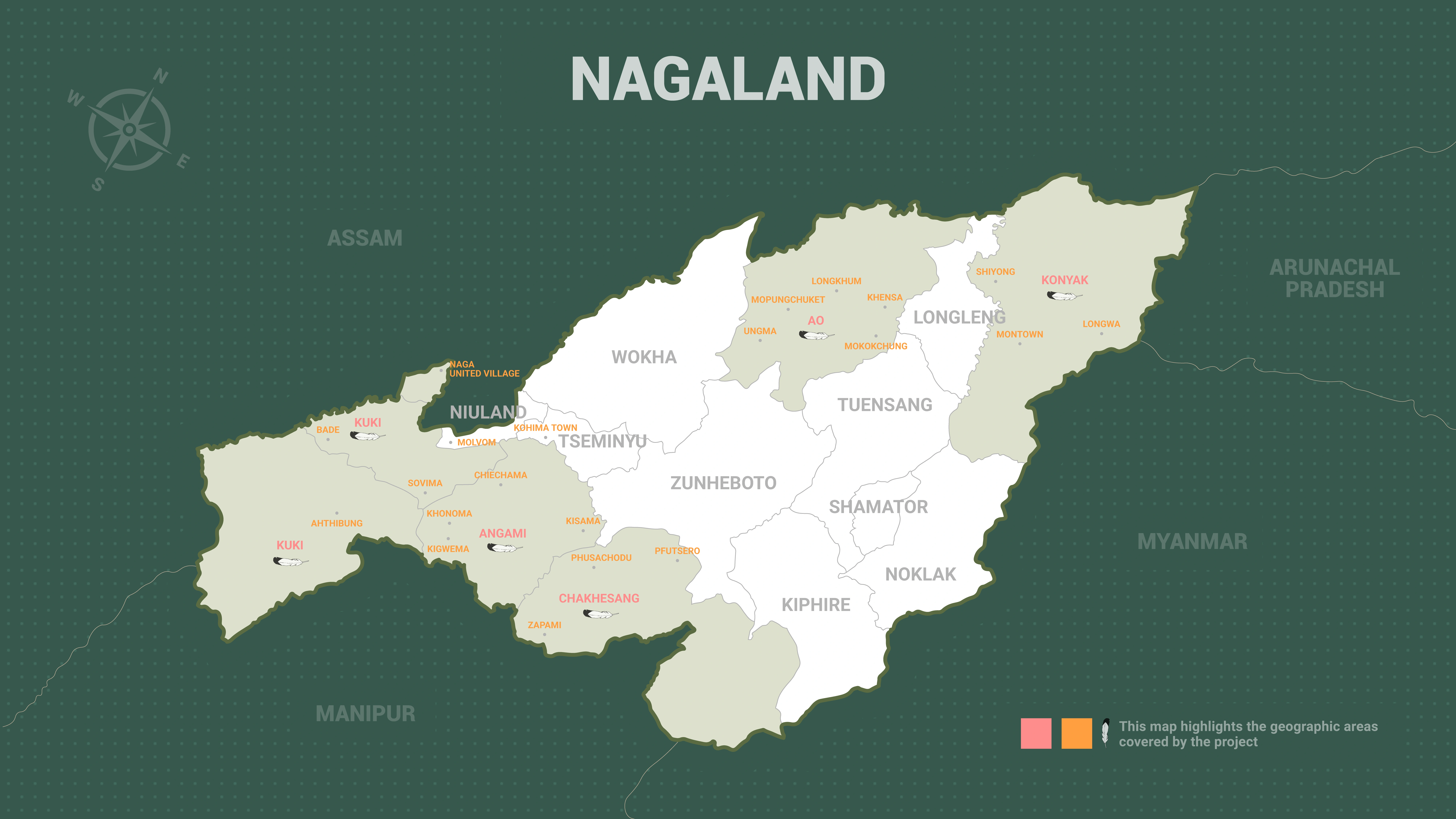
The traditional songs of Nagaland continue to thrive in contemporary society, adapting to changing times while retaining their unique essence. In terms of documentation and preservation of these songs, the Chakhesang Cultural Organization and its research centre have made an effort in the past to record 300-400 songs and have also organized a few knowledge and skill transmission courses for the youth of the community.

.jpg)
.jpg)
.jpg)









.jpg)
.jpg)
.jpg)
.jpg)
.jpg)
.jpg)
.jpg)

