Naga cuisine is a vibrant expression of the region’s cultural heritage, reflecting the deep connection between the people, nature, and traditional practices. Known for its bold flavors and minimal use of oil, it highlights fresh, seasonal, and locally sourced ingredients.
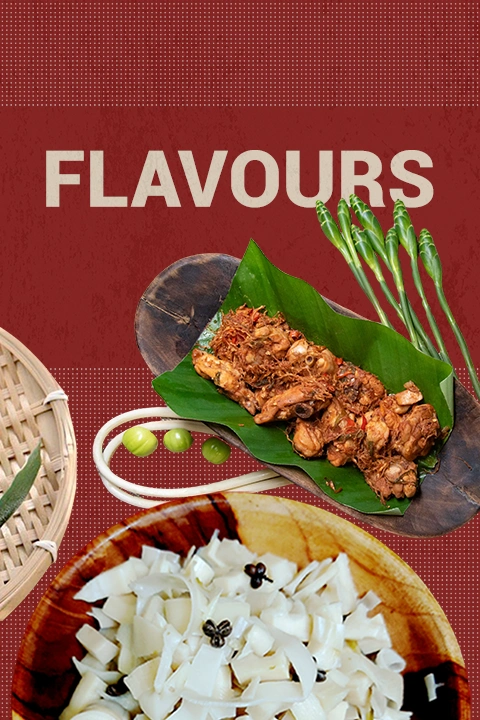
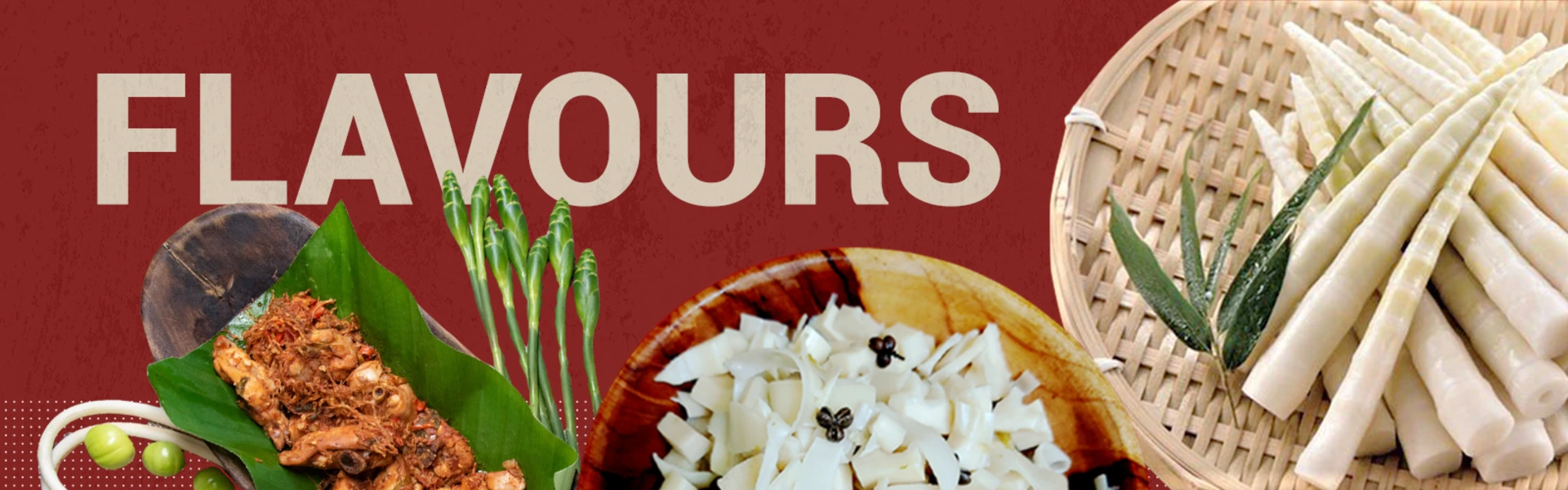
A defining feature of Naga cuisine is the use of fermented ingredients like axone (fermented soybeans), bamboo shoots, and anishi (fermented yam leaves). These ingredients not only enhance flavor but also play a key role in food preservation. Traditional methods, such as smoking meat over an open hearth, extend the shelf life of meats like pork, giving them a distinct smoky flavor that is central to many Naga dishes.
Another hallmark of Naga cooking is the use of Naga Chilies, which are used sparingly to add heat to stews, soups, and chutneys, balancing the intense spiciness with rich, savory flavors. The simple, traditional utensils found in Naga kitchens—like bamboo baskets and clay pots—emphasize sustainable cooking practices and the craftsmanship passed down through generations.
Dishes such as Galho, a comforting rice-based dish with seasonal vegetables and fermented soybeans, and Hinkejvu, a vegetable stew with mustard leaves and colocasia, highlight the region's focus on wholesome, nutritious meals. The inclusion of wild herbs, mushrooms, and fresh fish adds complexity to the flavors, showcasing the natural bounty of Nagaland.
Ultimately, Naga cuisine is more than just a way of cooking—it's a celebration of culture, community, and the region's rich biodiversity. It honors tradition while bringing people together over flavorful, meaningful meals.