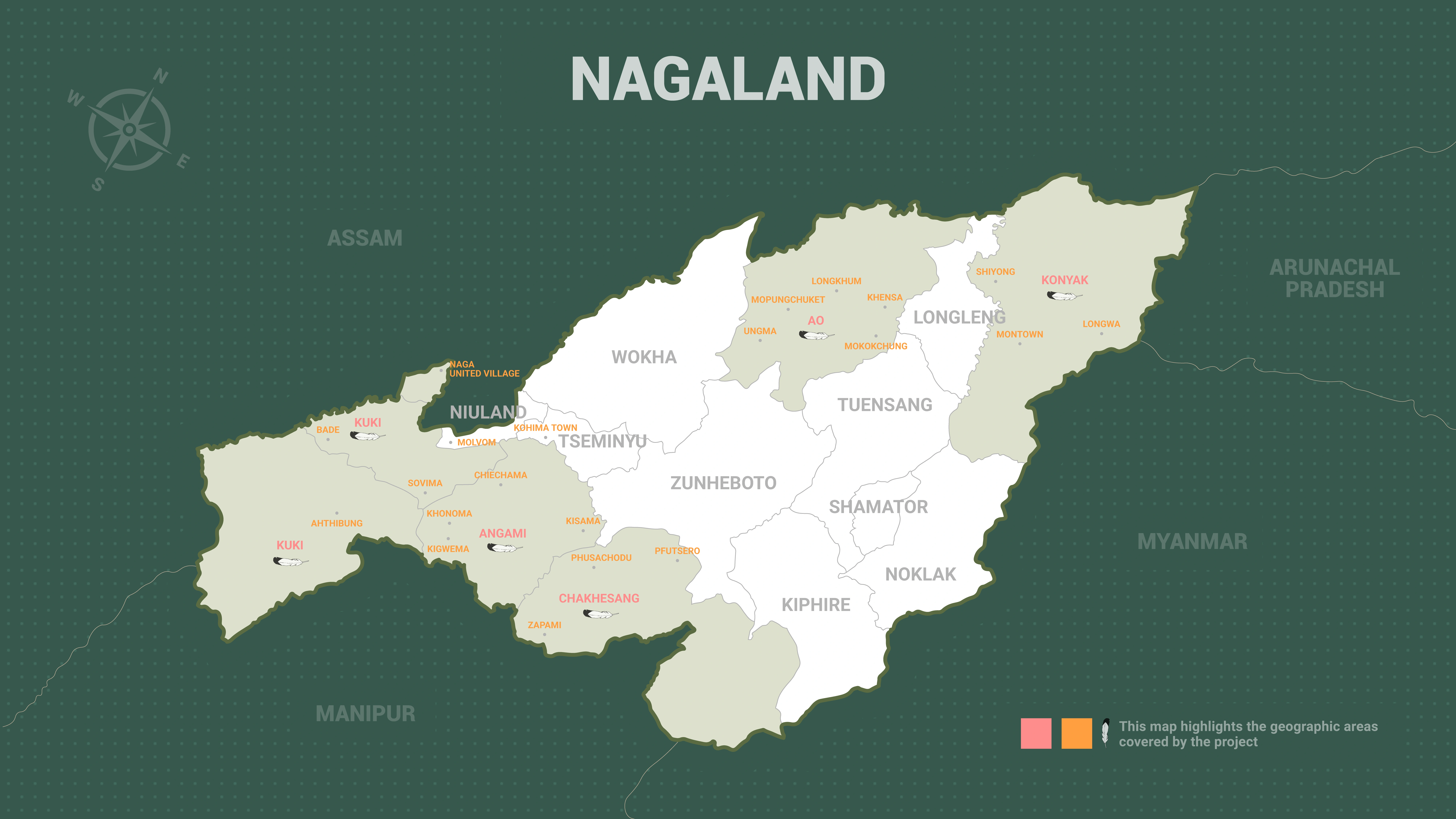
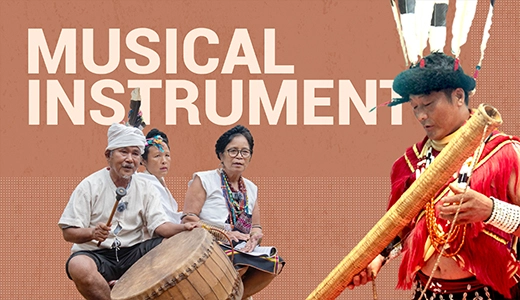
The Naga people possess a rich musical heritage, incorporating a diverse range of instruments, including percussion, flutes, and string instruments. Drums hold a prominent place, with the Asem being a particularly significant type. Crafted from wood and covered with animal skin, the Asem provides the rhythmic foundation for numerous performances. Bowed, single-stringed instruments traditionally crafted with bottle gourds are a distinctive feature of Naga music. The Tati, a traditional string-plucked instrument, is the most popular musical instrument of the Angamis and the Chakhesangs. Tati produces a unique sound, which mainly helps in maintaining the rhythm of a song. Wind instruments include flutes and indigenous mouth organs made of bamboo. The malen is a type of flute played by the Aos. The mouth organ made from bamboo pipes of different lengths produces different notes when blown into.
Additionally, horns of mithuns, as well as trumpet-like instruments made from metal, bamboo, or buffalo horn, are blown to create powerful, deep sounds serving both signaling and ceremonial purposes. A significant instrument in traditional Kuki society is a bamboo trumpet called a Pengkul, which they used for public communication. Some communities also incorporate gongs into their musical repertoire.
These instruments accompany a variety of cultural expressions, including songs, dances, festive celebrations, and ritual practices. Proficiency in playing these instruments often requires dedicated skill and practice. There are some village community members who are actively championing the preservation and innovation of these traditional musical instruments.









.webp)


