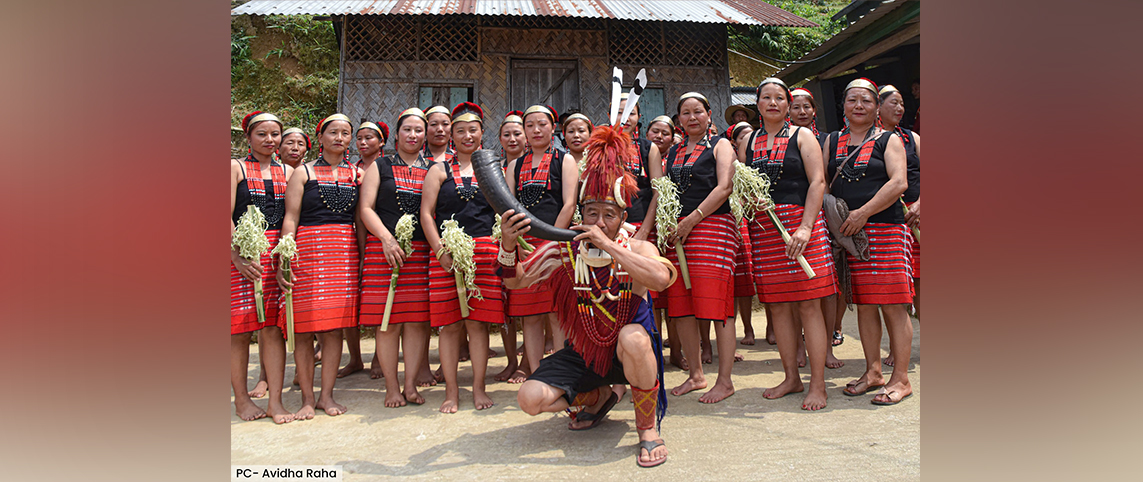
The Aos celebrate a number of festivals. Among the most significant is Moatsu Mong, a post-harvest festival organised between May and June, just when the sown seeds in the fields begin to sprout. Moatsu is the spring festival and literally means ‘to bless.’. It marks the completion of the sowing season and is a time for thanksgiving, merrymaking, and community bonding. The festival provides for recreation and entertainment after the stressful field and village work. During this festival, one of the symbolic celebrations is Sangpangtu, where a big fire is lit and women and men sit around it and enjoy the best wines and meat. Forecast is made by the righteous men who live by the guidance of the Almighty to see whether good or bad times are awaiting the people. The villagers exchange gifts, feast on traditional delicacies, and engage in lively songs and dances.
Another important festival is Tsungremong, a pre-harvest festival celebrated for six days. It marks the end of the plantation season and is a time for offering sacrifices to the gods for a bountiful harvest. The Ao people wear their finest traditional attire, perform ritualistic dances, and partake in feasts and festivities.
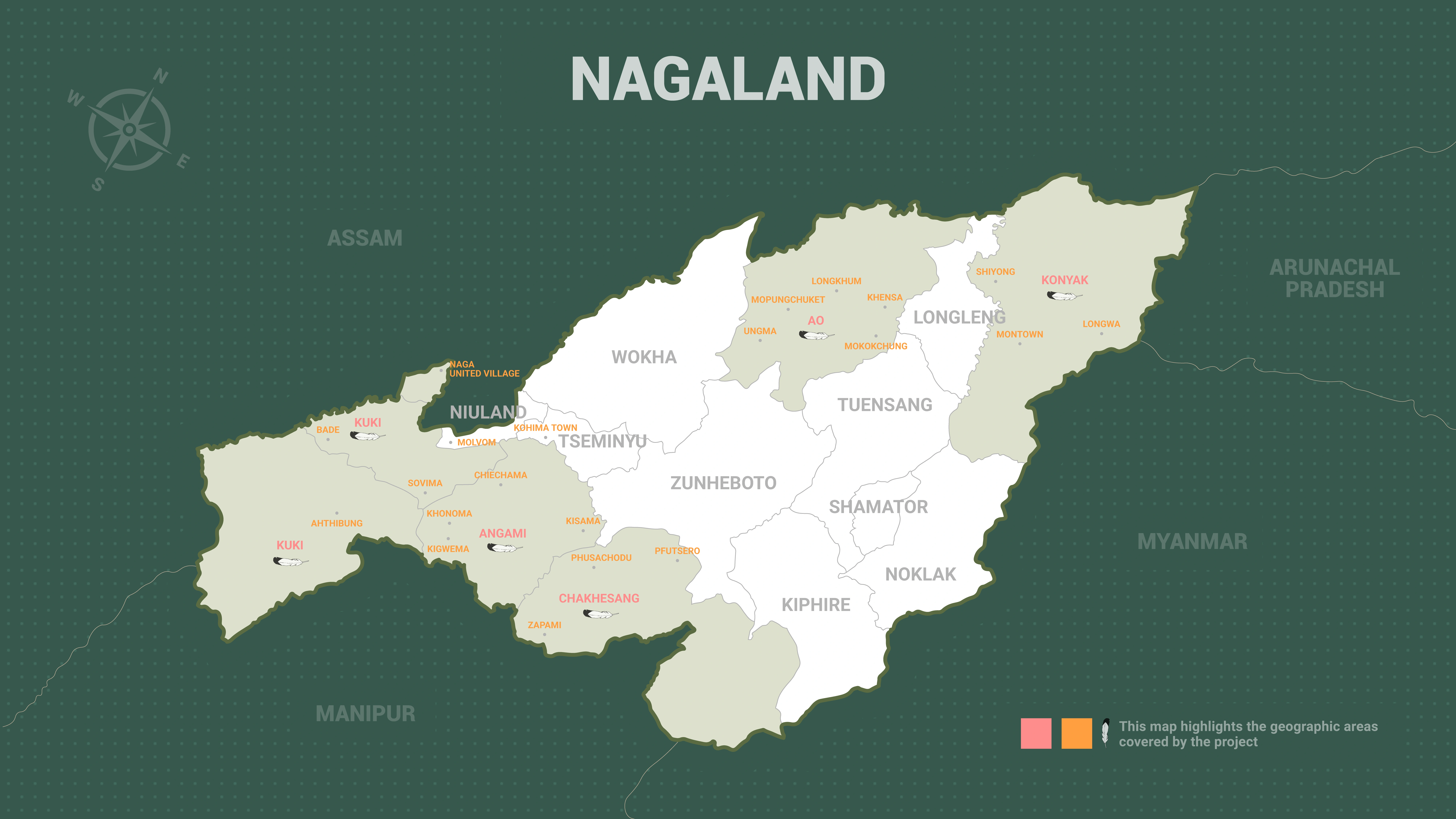
Some of the Ao villages of Mokokchung also celebrate tourist-oriented festivals such as the Cherry Blossom Festival of Longkhum village. The village landscape is full of cherry trees. The village thus started organizing a 3-day festival celebrating the ushering of spring with dancing, singing, traditional crafts, and food. In 2024, tourists visited the festival from all over Nagaland.
These festivals are an integral part of Ao culture, providing opportunities for social interaction, cultural exchange, and the preservation of traditional values. They reflect the Ao people's deep connection to their land, their ancestors, and their vibrant cultural heritage.

.png)