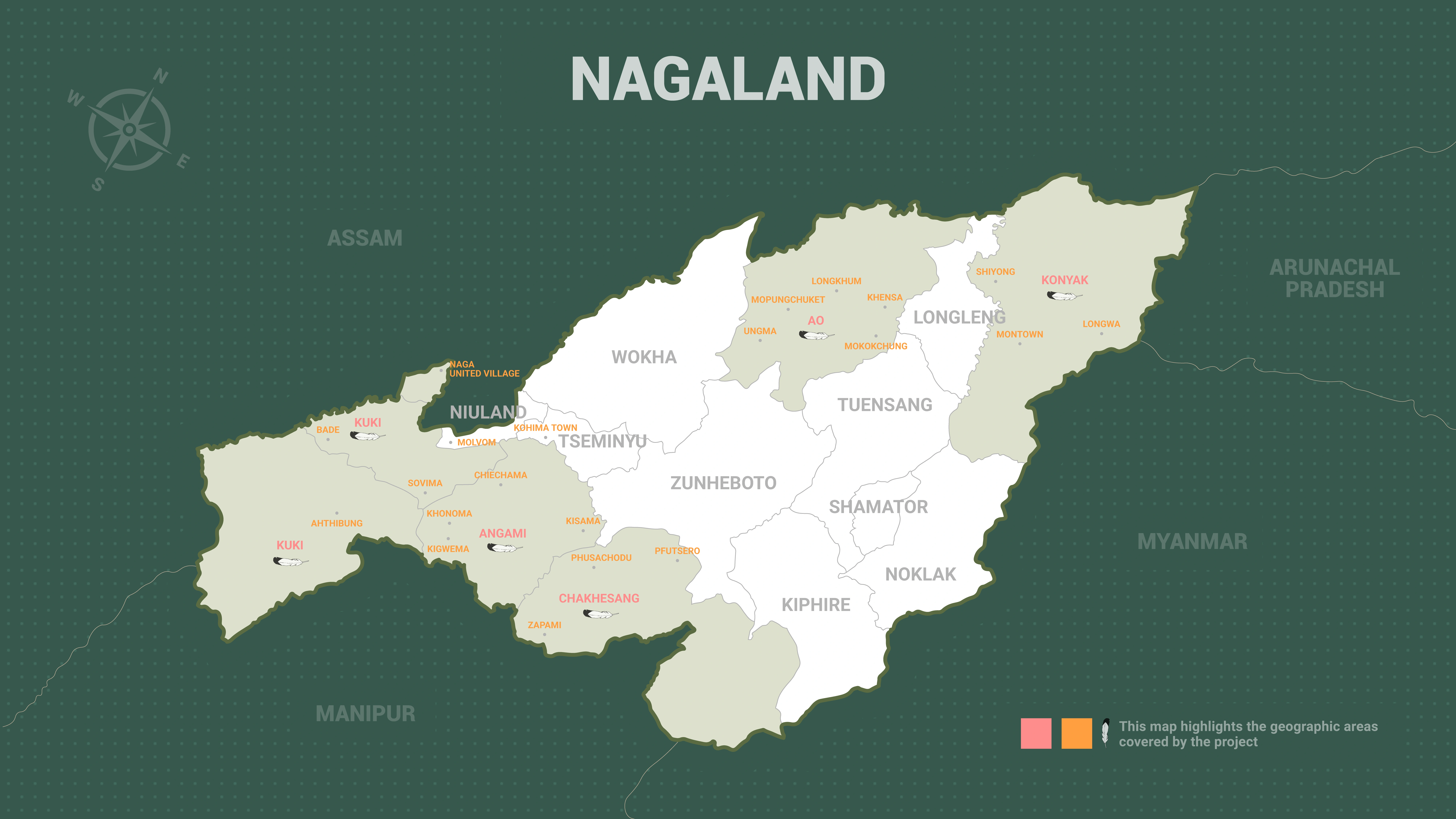
The Konyak tribe, renowned for their expert weaving techniques, creates textiles that are an essential part of their cultural identity. Like many other communities in Nagaland, the Konyaks weave their own clothing using traditional loin looms, a practice that has been passed down through generations. The designs, colours, and motifs used in their textiles are not just aesthetic; they are symbols of social status, representing the wearer's position within the community.
The traditional attire of Konyak women consists of a wraparound skirt called Mekhala (referred to as Shengnung in the Konyak dialect) and a shawl. The Mekhala is a versatile piece of clothing that plays a central role in the daily life of Konyak women. Typically, women wear a black Mekhala, locally known as kokkech shengnung, which is common across the tribe. However, the women of the Wakching area are known for wearing a white Mekhala, setting them apart with this distinct variation in their attire. These garments are woven with intricate patterns and represent the connection of the Konyak people to their environment, culture, and community.
Among the most renowned textile designs of the Konyaks is the Anghya Nyekok, meaning "Queen’s Mekhala." Historically, this particular design was reserved exclusively for the women of the Angh’s (King's) family, symbolizing their royalty and high social standing. The design is distinguished by a chevron pattern, woven using a supplementary weft technique, a complex process that creates the striking, multi-layered motifs. The chevron design, once the hallmark of Konyak heirarchy, is now more widely available and accessible to the broader community.
In a beautiful adaptation of tradition, Konyak women weavers have taken the Anghya Nyekok design and transformed it into modern items, such as sling bags. These bags have gained popularity not only among the Konyak people but also with tourists who visit the region, offering a glimpse into the tribe’s rich weaving heritage. The bags, featuring the same chevron pattern, represent a fusion of traditional craftsmanship with contemporary use, ensuring the preservation and continued relevance of the Konyak weaving techniques. This adaptation is a testament to the ingenuity of the Konyak people, allowing them to share their cultural heritage while simultaneously meeting the demands of modern-day life. Through their textiles, the Konyak tribe continues to weave a story of culture, status, and artistry that is both timeless and evolving.








.webp)
.webp)
.webp)
.webp)
.webp)
.jpg)


.webp)
.webp)
.webp)
.webp)
.webp)