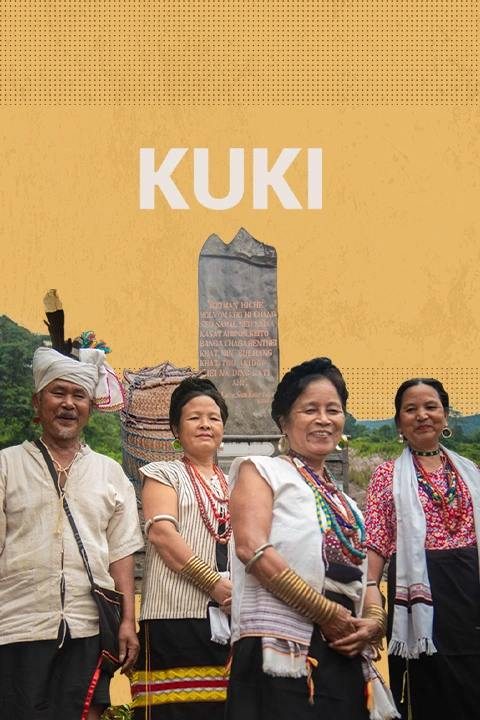
Kuki weaving is known for its rich colors and intricate designs, with each piece carrying deep cultural meaning. Traditional wraparounds and shawls are usually black or white, but no two are exactly the same. Every clan has its own unique patterns and motifs, some of which are reserved for special ceremonies or high-ranking members. These designs reflect the diversity and identity of the Kuki people.
Shawls hold great cultural importance and are worn during festivals and rituals. Some feature patterns that tell stories of the past, depicting myths, legends, or the natural world. Many designs draw inspiration from animals, trees, and rivers, showing the Kukis’ deep connection to nature.
Each clan has its signature weaving style. The Thangnang and Saipikhup shawls are especially popular and are woven by hand with great care. For men, the Ponve shawl is an important garment, often draped over the shoulders during special occasions. Its geometric patterns symbolize nature, animals or tribal legends and certain designs are worn only by respected leaders in the community.
For women, the Khamtang is a traditional wrap-around skirt. It is woven with vibrant stripes, zigzag patterns, and nature-inspired motifs like flowers and birds. Women pair it with a fitted blouse and an embroidered shawl similar to the Ponve. These shawls are decorated with clan symbols, traditional stories, or beautiful landscapes, making each piece a reflection of heritage and pride.
Kuki textiles are more than just clothing—they represent respect for nature, community bonds and ancestral traditions. Each thread carries the story of the people who weave and wear them, keeping their culture alive for generations to come.








.webp)
.webp)
.webp)
.webp)
.jpg)


.webp)
.webp)
.webp)
.webp)
.webp)