CHOOSE COMMUNITY

TEXTILES

The textiles of the Chakhesangs are specific to their cultural identity, full of symbolic elements related to the community’s cultural and spiritual beliefs. Exclusive designs with mostly geometric motifs and different colours are woven for men and women, rich and the ordinary, leaders and warriors, signifying a person’s status, power, and role in the community. The Chakhesangs continue their acclaimed tradition of processing, spinning, and weaving their indigenous cotton, which is marketed by various local organizations and brands.

The most gorgeous shawl of the Chakhesangs is worn by the rich who have offered feasts of merit to all the villagers. Every generation has to earn the privilege of owning and wearing this shawl by acquiring respect and wealth through hard work, proven by the ability to offer feasts of merit for all. The shawl woven in white, yellow, red, green, orange, and black colours contains many symbolic motifs such as the elephant, mithun, peacock, flowers, butterfly, sun, moon, and the stars, signifying strength, affluency, honour, beauty, happiness, and eternity.

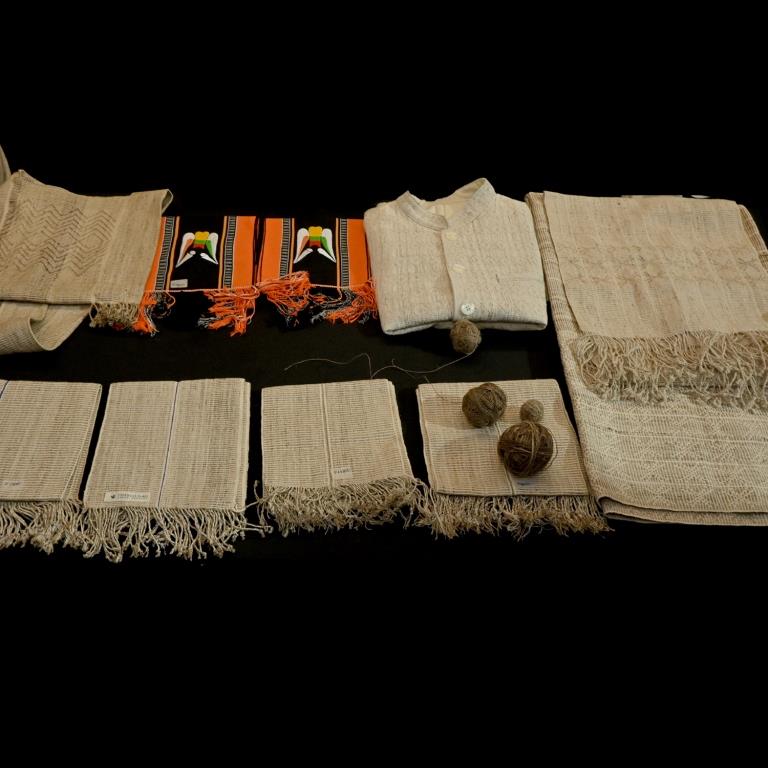
Chakhesangs are also well-known for weaving the indigenous variety of stinging nettle fibre (locally called ‘thebvo,’ meaning nettle fibre) into shawls and wraparounds. The fabrics are also stitched into jackets. It takes great skill to weave this fibre which is a long and tedious process carried out entirely by hand.

Traditionally the villagers used nettle fibre weaves as quilts, wraps for carrying enemy heads during wars, and paddy during harvest. The Chakhesangs of Zapami village, who have launched a local brand of nettle fibre weaves called ‘Thebvo Nah,’ say, “Thebvo is used by a person of Zapami from birth until death and is closely entwined with the fundamental values of the village.

IMAGE GALLERY

Take a glimpse into the weaving tradition of the Chakhesangs.

FEATURED

ARTICLES

The Weaving of Chekhesang

The Chakhesang tribe is renowned for its vibrant creativity, vividly reflected in their attire and ornaments. Every pattern, motif, line, and color in their garments tells a meaningful story, passed down faithfully through generations. Their mastery of cotton cultivation, spinning, dyeing, and weaving predates the advent of Christianity, with nettle fibers and deccan jute also being integral to their textiles.

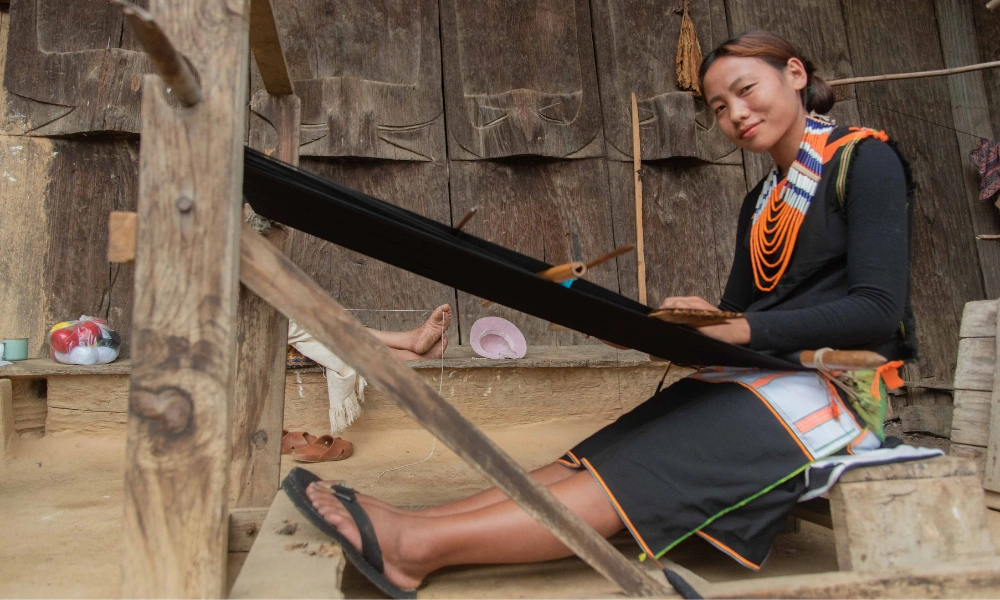
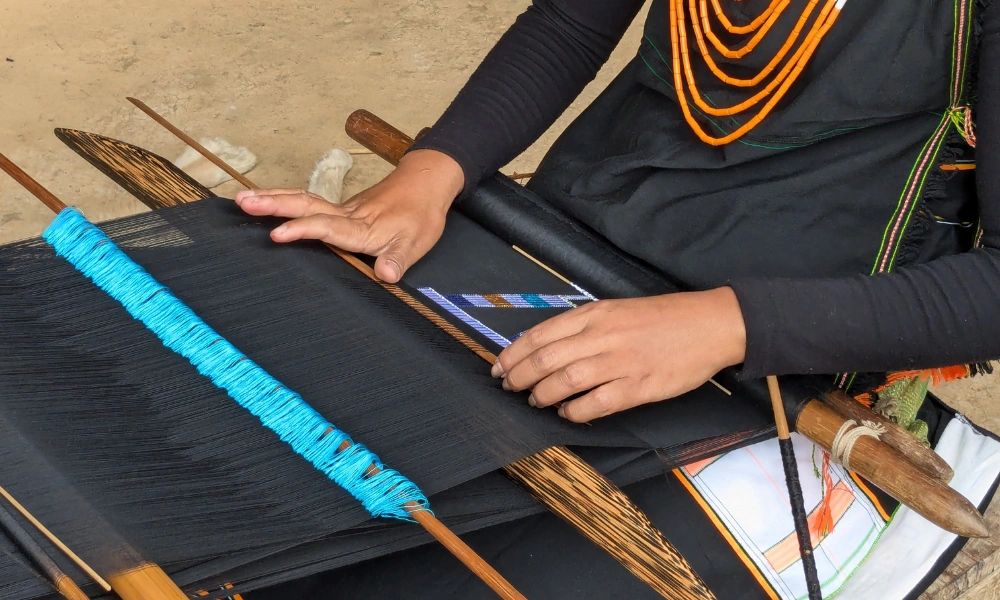
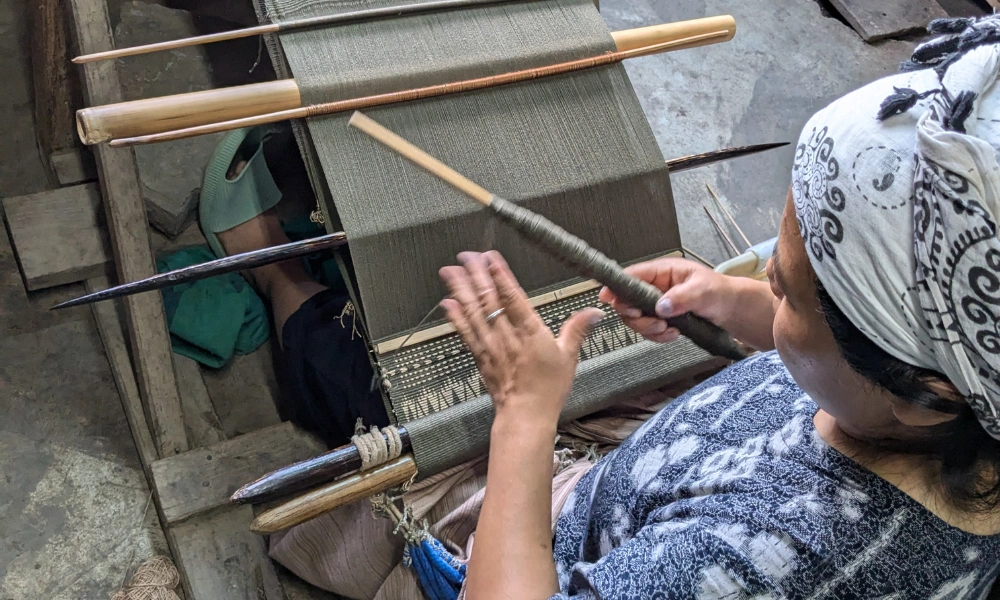
Chakhesang women, celebrated for their weaving prowess, traditionally used the loin loom to craft handwoven shawls and garments, each piece unique in concept and execution. While their ancestors adorned themselves in colorful attire during festivals, everyday clothing was more subdued, made from practical materials like nettle and jute for tasks like harvesting or carrying goods. These garments balanced utility with artistry, embodying the Chakhesangs' cultural depth.

 Exclusive designs with mostly geometric motifs and colours are woven for men and women, rich and the ordinary, leaders and warriors, and so on. It is fascinating to see how they represent their status, power, and role in the community through their shawls and scarves. Chakhesang weaving has been granted Geographical Indication (GI) status, which legally protects the unique craft and its association with the Chakhesang region.

Traditional designs are categorized into horizontal bands, intricate woven patterns, needlework, and hemmed edges. These patterns not only added aesthetic value but also signified honor and recognition, with special shawls reserved for warriors and the affluent as symbols of achievement.

Weaving was once a universal skill among Chakhesang women, taught from a young age with toy looms made from ginger lily fibers. However, as modernity reshaped interests, traditional arts, particularly weaving, faced decline. Today, a few dedicated women are reviving this legacy by adapting traditional patterns for contemporary designs, preserving the tribe's rich cultural heritage while ensuring its relevance in the modern world.


Shawl of the Feast of Merit : THÜPIKHU/THSÜKETSÜRA

In the Chakhesang community, hosting grand feasts of merit was a revered tradition symbolizing prosperity, generosity, and social honour. These feasts, involving abundant food, rice beer, and elaborate rituals, were open to the entire village and sometimes neighbouring villages. Hosting such events required immense preparation and years of saving, reflecting the host family's hard work and commitment.

The highest honour for completing these feasts was the entitlement to wear special shawls, such as the Thüpikhü and Rüzakhü, which were badges of merit. These shawls, adorned with intricate motifs like elephants, stars, and geometric patterns, symbolized accomplishments, blessings, and prosperity. The shawls were not hereditary; each generation had to earn the right to wear them through their deeds.

Traditionally, only families with three or four daughters could weave the Thüpikhü shawl, adhering to strict taboos. The entire process had to be completed within a single day, emphasizing the shawl's exclusivity. Women’s versions featured motifs of conches, brass bangles, and other feminine symbols, paired with matching wrap-around skirts.

The Motifs and Meanings

The shawl represents the highest honour, symbolizing prosperity and generosity. Originally, it was the couple who had performed all the designated feasts of merit that were bestowed with this honour. The patterns and colours on the shawl, such as white, green, and red, indicate the various accomplishments the wearer has achieved. Each motif on the shawl carries its significance:

  • Elephant: The elephant motif signifies strength and abundance. It also symbolizes prosperity, as elephants require less food compared to their size and strength. This pattern represents powerful virtues and an abundance of meat.

  • Mithun: The mithun, a traditionally reared animal, is highly valued above other species during feasts. The affluent families hosting a 'Feast of Merit' for the village, consider the mithun the most preferred animal. The skulls of mithuns are often preserved and used to decorate the homes of the rich. The motif of the mithun on a shawl symbolizes wealth and prosperity.

  • Animal Head: Those who have performed the 'Feast of Merit', were given the privilege of decorating the entrance of their homes with a carved wooden head of a mithun or buffalo. They are also entitled to adorn their homes with Horns on top. This motif richly symbolizes the honour associated with performing this traditional rite and is thus depicted on the shawl.

  • Star: The star motif represents brightness, much like a star in the sky. It symbolizes happiness and contentment and reflects the idea that the stars shine for everyone and flowers bloom for all , everyone is equal in the true spirit of humanity.

  • Peacock : The shawl also features a peacock motif to signify beauty, suggesting that all who are entitled to wear it would be as beautiful as this magnificent bird.

  • Flower : The flower symbolizes happiness and contentment shared among all people partaking in the feast regardless of being rich or poor.

  • Butterfly : Representing good spirits, the butterfly is a symbol taken for its elegance, smartness, light and swift movements.

  • Sun/Moon : The sun and moon symbolize eternity.

  • Pleats : The parallel pleats in between the shawl depict the milestone achieved after the toils and sweats.


Source : Chakhesang Naga - Attires & Ornaments (2nd ed.). (n.d.). Chakhesang Women Welfare Society.

Author: Tanisha Zaman

Stinging Nettle Fibre Weaving:

The Chakhesang community is widely admired for its refined aesthetics and rich cultural heritage. Among its many artistic traditions, one stands out for its uniqueness and deep-rooted cultural symbolism—the weaving of stinging nettle fibre, locally known as thebvo. This indigenous fibre is extracted from the stinging nettle plant, which grows abundantly in the forests surrounding Zapami village, the birthplace of this remarkable craft.

For generations, the women of Zapami have harvested and processed this organic fibre entirely by hand, transforming it into beautiful shawls that carry both practical and symbolic value. More than a craft, thebvo is a living tradition and a marker of identity for the Zapami community. It is celebrated as the official attire on special occasions like Zapami Cultural Day and Women’s Day, reflecting the community’s deep pride in their heritage.

During visits and conversations with community elders and leaders, it became clear that thebvo represents more than just traditional clothing—it embodies the spirit and origin of the village. It is seen as a symbol of equity, signifying a harmonious balance across gender, age, culture, and social standing in Zapami.

Historically, thebvo served various roles beyond everyday clothing. It was used as quilts, wraps during wartime to carry enemy heads, and as slings for transporting harvested paddy. “Thebvo is with a person from birth till death,” say the villagers, emphasizing its integral connection to life and the values of the community.

The making of thebvo is an intricate, labor-intensive process, passed down through generations of Zapami women. Harvesting occurs between November and February when the stinging nettle plants are at their best. The bark is stripped and sun-dried before entering the meticulous multi-step process of fibre extraction and preparation.

  1. Mechi Keru: Manual removal of the plant’s prickles.

  2. Thebvo Tenyi: Hand-kneading to clean and discard the outer layers and impurities.

  3. Soaking & Splitting: The cleaned fibres are soaked and then delicately split into fine filaments called thebvo kho.

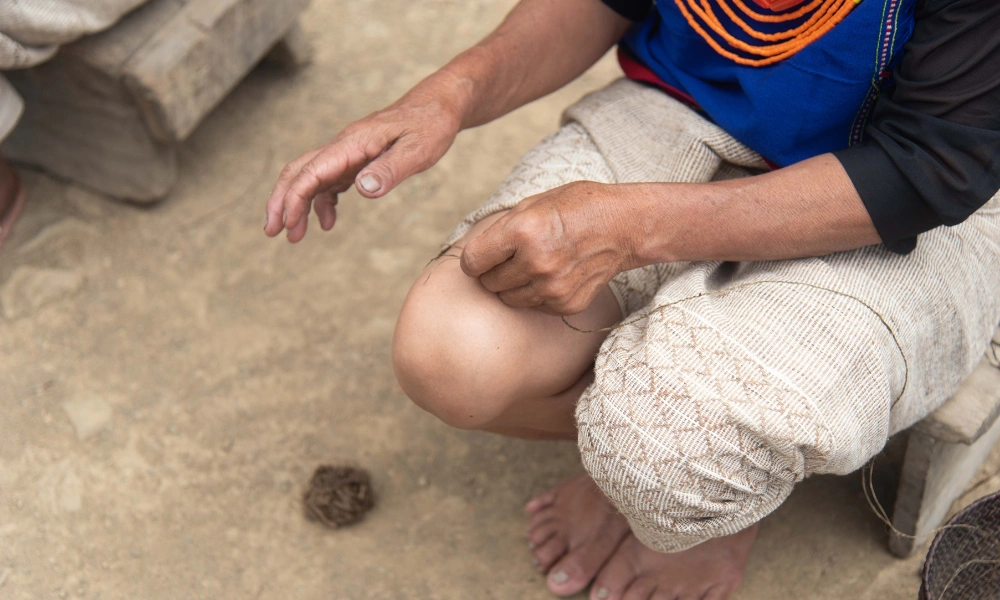
  4. Thebvo Melu: The fine splits are thigh-reeled into long, slender yarn strands.

  5. Che Ketsu: Yarn strands are rolled into balls.

  6. Lumih Spinning: The yarn balls are soaked again and spun using a traditional spindle known as lumih.

  7. Lo Re & Lotatsu: The spun yarn is sorted into hanks (lo re), sun-dried, threshed, cleaned, and treated with pounded white rice to enhance durability and luster—this final refinement is known as lotatsu.

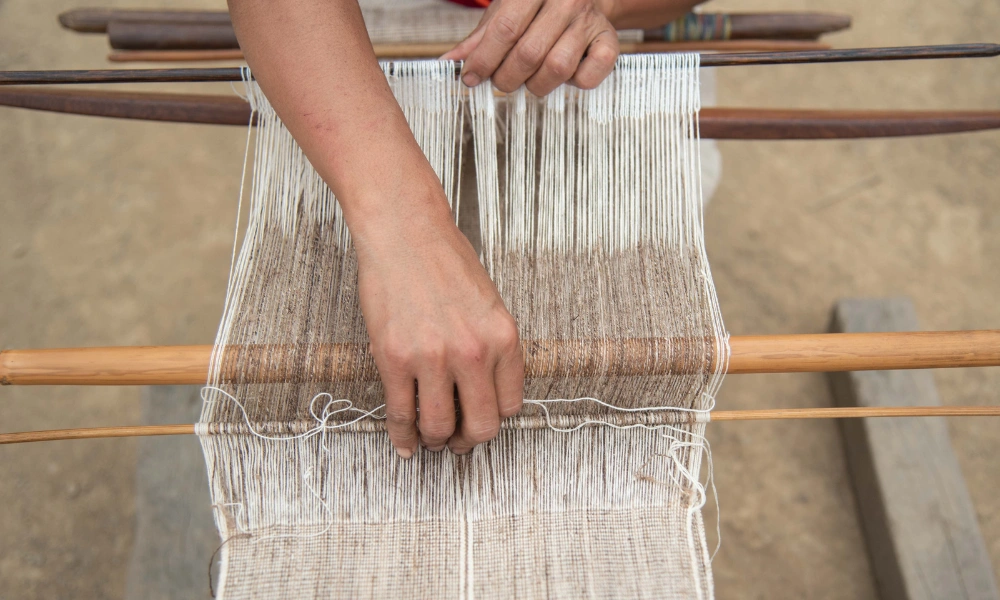
The yarn is finally woven on loin looms, and four rectangular panels are stitched together to form a standard-sized thebvo shawl. Typically, about 25 women are engaged in the production of nettle fibre weaves at any given time, and the work is often accompanied by traditional songs—an auditory thread that links each stage of the process to the spirit of the community.
Author: Nirmalya Roy

Tukhu Rhi: Banana Fibre Craft

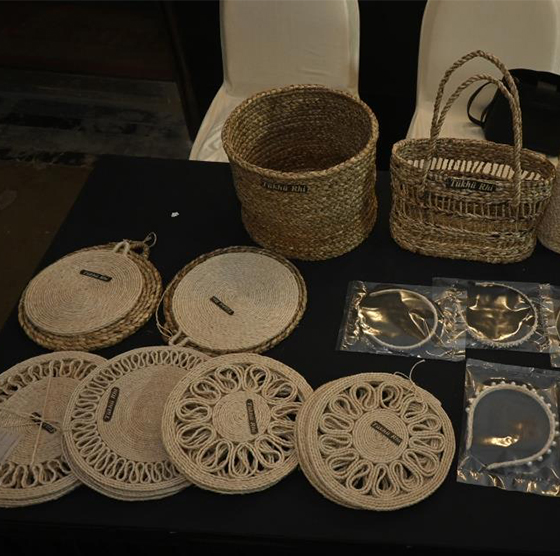
Tukhu Rhi is a women’s collective based in Bade Village, Nagaland, committed to crafting eco-friendly products from banana fibre. This initiative blends traditional craftsmanship with a deep commitment to sustainability, helping preserve indigenous skills while promoting economic empowerment for local women. The collective specializes in weaving baskets, mats, and other handmade items, all crafted from banana fibre and bark, which are processed through simple, sustainable methods of cutting, washing, and drying. The fibres are then braided or used as strands to create various products.

The TukhRai Banana Fibre Cluster in Bade Village is a prime example of how traditional skills can generate sustainable income and promote environmental conservation. Nagaland’s abundance of banana plants, particularly wild varieties like Musa velutina and Musa mannii, provides a renewable source of high-quality fibre. These fibres are stronger than jute and can be used in a variety of applications, from decorative items to functional products.

Artisans in Bade have mastered the art of transforming banana fibres into a wide range of goods. Depending on the grade of fibre, they create soft products such as wall hangings, table mats, and bags, or more durable items like carpets, tool bags, and cleaning brushes. The fibres are sometimes blended with cotton, wool, or synthetic materials to create softer textures, or left coarse for more robust products.

This banana fibre extraction cluster has become a vital economic activity in the region, enhancing the livelihoods of local artisans and promoting sustainable practices by utilizing agricultural waste. Visitors to Bade can witness the harmonious blend of nature, culture, and craftsmanship, experiencing the peaceful rural lifestyle while supporting the preservation of traditional knowledge.


Author: Nirmalya Roy

READ MORE ARTICLES